
Training Around an Injury: Why Keeping Your Routine Matters
21/09/2026
At the start of the year, I picked up a knee injury.
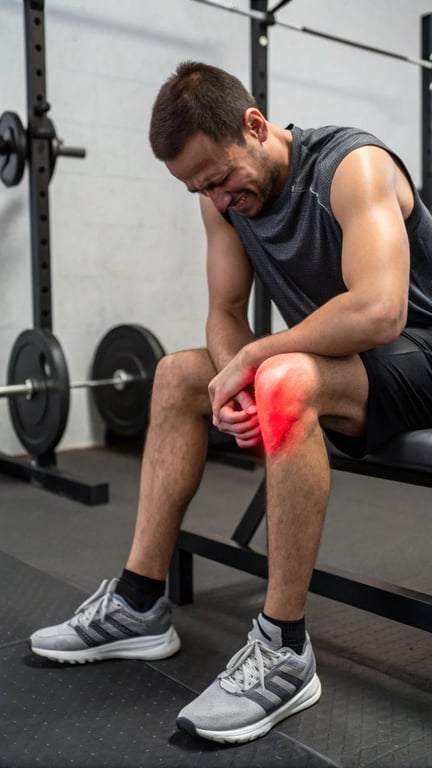
For a while, every time I did any full range of movement, whether it was a squat, a lunge, or something as simple as walking, my knee would swell. It wasn't just painful. The swelling reduced my range of movement and started affecting my everyday life and quality of life
At first, I tried to train around it. I changed exercises, experimented with different strength movements and tried to keep myself moving without making things worse, while also building strength and muscle stability.
But unfortunately, whenever I feel better and increase my range of movement, the injury shows up again.
Eventually, I had an MRI, and we found the problem was with my meniscus. The movements I was doing were repeatedly irritating the knee, which was causing the swelling and restriction.
I ended up having surgery.
Now, I'm two weeks post-operation, and honestly, my knee already feels so much better compared with the pain and restriction I was experiencing before surgery. It's quite unbelievable.
But having an operation doesn't mean you suddenly get your normal life back.
I'm still being careful. A simple twisting movement can cause pain, and I need to respect where my body is right now. So the question becomes:
What CAN I do?
And this is something I talk about with our members all the time.
Training around an injury doesn't mean stopping. I'm still showing up at the gym around five times a week.
Training around an injury doesn't mean stopping. I'm still showing up at the gym around five times a week.
Obviously, my lower-body training looks completely different. At the moment, my lower-body work is my rehabilitation. That's my priority.
But I can still train my upper body.
I can still do cardio using my arms.
Luckily, at Fitness Yard, we have access to different machines, so I've been able to use the rower and air bike with my legs completely out of the equation.
Luckily, at Fitness Yard, we have access to different machines, so I've been able to use the rower and air bike with my legs completely out of the equation.
I'm also doing upper-body strength session and keeping my normal routine where I can.
I even did join to Friday class and did deadlifts, BUT seated.
I even did join to Friday class and did deadlifts, BUT seated.
I'm not doing my usual 12,000 steps anymore. Instead, I'm aiming for around 6,000–8,000, with breaks and adjustments when I need them.
It's not the training I was doing before.
But I'm still training.
And I think that's the important part.
But I'm still training.
And I think that's the important part.
Keep the habit, even when the training changes
One of the biggest mistakes people can make after an injury is thinking:
"I can't train properly, so I might as well stop completely." I understand that feeling because I've experienced it myself. But getting out of your routine completely can make returning even harder.
"I can't train properly, so I might as well stop completely." I understand that feeling because I've experienced it myself. But getting out of your routine completely can make returning even harder.
From around the second day, once the medication had worn off and I was feeling more comfortable, I started getting back into my usual routine.
Morning session? Still there.
Afternoon walk? Still there.
Afternoon walk? Still there.
The sessions might be shorter. They might look completely different. They might not feel as satisfying as a normal training session.
But I'm still ticking the box.
And that matters.
But I'm still ticking the box.
And that matters.
Because when you're eventually cleared to return to your normal movement, you're not starting again from zero. You've maintained the habit of showing up.
Your injury doesn't have to become your identity
Whether you're dealing with a knee injury, shoulder injury, back pain or another limitation, your training might need to change. That doesn't mean your whole routine needs to disappear.
Of course, you need to follow the advice of your doctor, physio or rehabilitation professional and respect what your body is telling you. Training around an injury isn't about ignoring pain or pushing through something that needs rest. And a good coach, good physiotherapist, or sports therapist will be able to guide you to be able to do your usual life safely.
It's about finding what you CAN safely do.
Maybe that means training your upper body.
Maybe it's rehabilitation work.
Maybe it's gentle cardio.
Maybe it's simply getting back into the gym and doing what you're currently capable of.
Maybe that means training your upper body.
Maybe it's rehabilitation work.
Maybe it's gentle cardio.
Maybe it's simply getting back into the gym and doing what you're currently capable of.
For me, the goal right now isn't to prove how much I can lift. It's to keep moving forward. One small session at a time.
Because when I'm eventually ready to return to full training, I want to have kept the habits that have taken me years to build.
An injury might change your training, but it doesn't have to take away your routine.
And sometimes, training around the injury is exactly what helps you keep moving towards the person you want to become.
If you’re struggling with an injury or simply don’t know where to start after a long break, click NO-SWEAT INTO and book a FREE appointment with one of our coaches. We’ll help guide you safely back to doing what you love.